
The Complete Guide to Buying and Fitting Kids' Shoes
Buying kids' shoes the right way comes down to three things: measuring your little one's feet regularly, checking for a proper fit with enough room to grow, and knowing how fast kids' feet change at different ages. This guide walks you through everything you need to know to find shoes that help your child's feet grow strong and healthy.
The Little Feet Rulebook
Ready
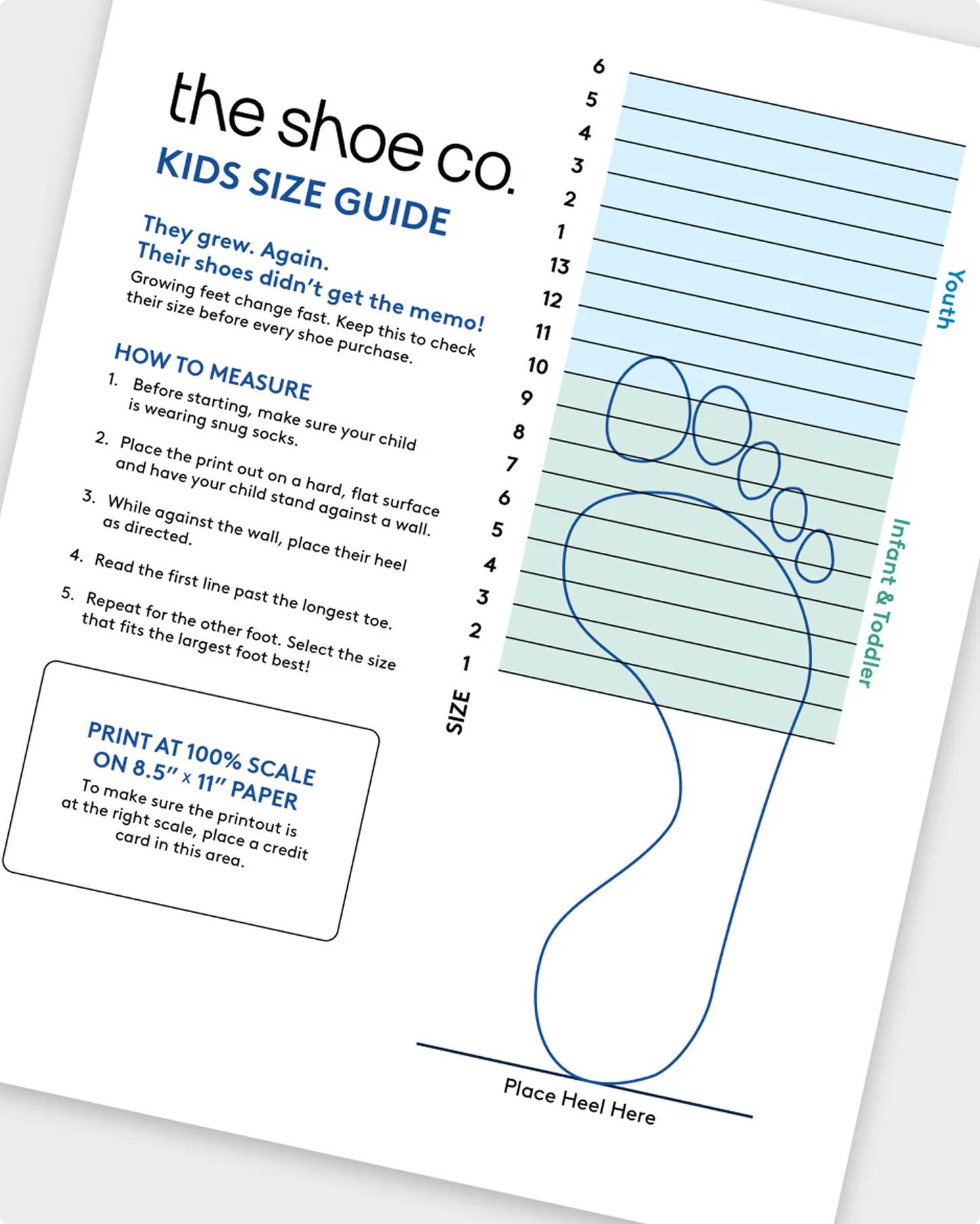
Start by downloading and printing the sizing tool. Make sure pants are rolled up and socks are snug (but not too tight).
Set
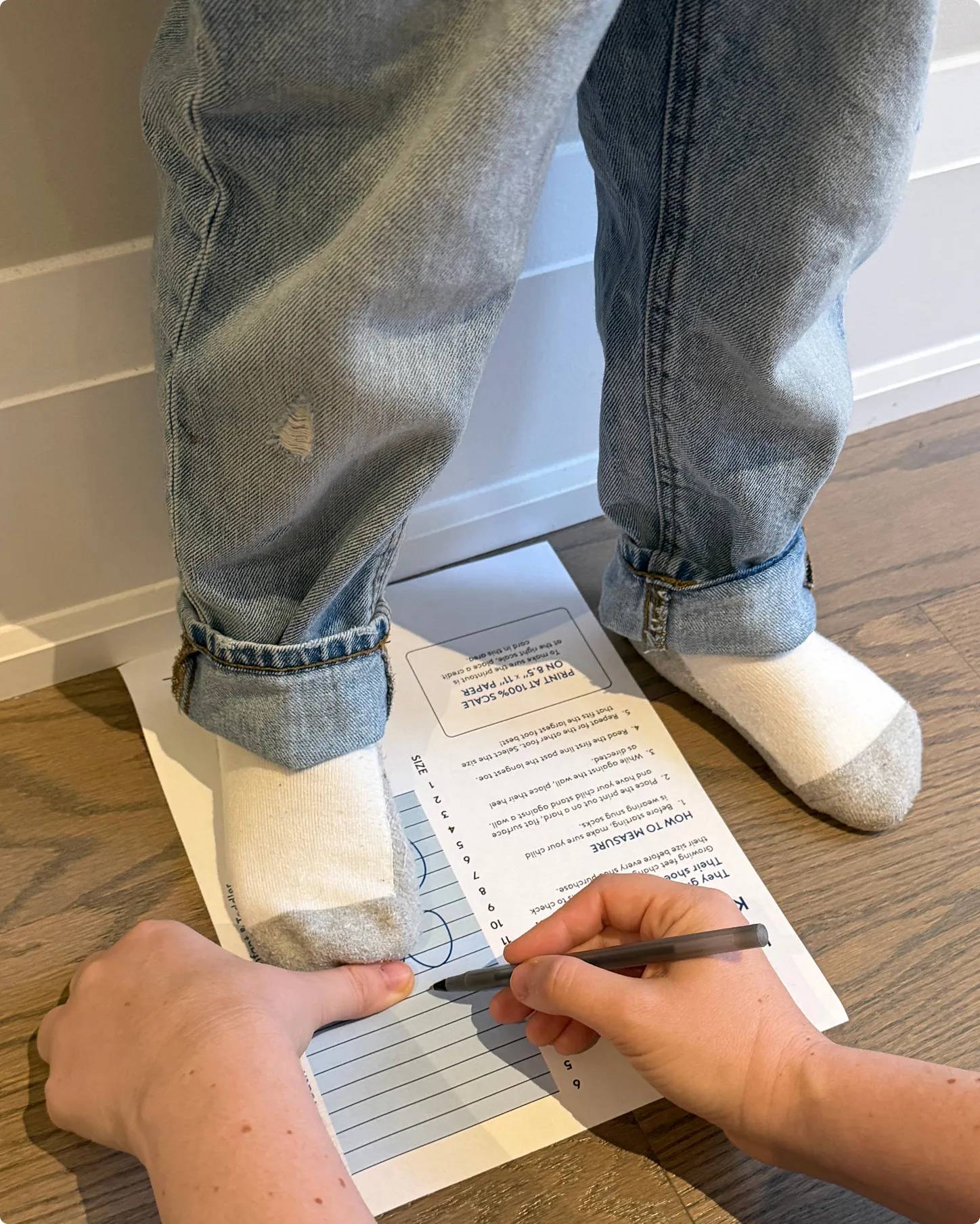
Place the sizing tool on the floor next to a wall & have your child stand on it against the wall, with heels at the heel line. Make where the tip of your child's big toe ends, then add about a thumb-width space to determine a comfortable shoe size.
Shop!
shop with confidence knowing what size your growing kid needs today. Keep the guide and check again in a couple months when it's time to size up!
Before starting, click here to download and print the sizing tool.
How Often Should You Measure Your Child's Feet?
Children's feet grow rapidly, so regular measuring is essential. Follow these age-based guidelines:
- Under 15 months: Measure every 2 months
- Ages 2-3: Measure every 3-4 months
- Ages 4+: Measure every 4-6 months
How to Measure Your Child's Feet at Home
Follow these steps for an accurate measurement:
- Have your child stand on a piece of paper with their heel against a wall
- Mark the longest toe with a pencil
- Measure from the wall to the mark
- Add a thumb-width (approximately half an inch) for growth room
- Measure both feet, as one may be slightly larger
- Always fit shoes to the larger foot, and make sure to measure late in the afternoon or evening as feet naturally swell throughout the day.
Baby and First-Walker Shoes
Babies don't need shoes until they begin walking. Before that stage, bare feet or soft socks are best for natural foot development. Once your child starts walking, choose:
- Soft-soled, flexible shoes that mimic barefoot walking
- Lightweight materials that don't restrict movement
- Secure closures that stay on without being too tight
In-Store Fit Testing Techniques
When trying on shoes, use these specific tests:
- Heel grip test: The heel should fit snugly without slipping when walking
- Width test: The shoe should not bulge at the sides or pinch the foot
- Toe room check: Leave half an inch of space for toddlers, or a thumb-width for older children, between the longest toe and the shoe's end
Have your child walk around the store to ensure comfort and proper fit.
Signs Your Child Needs New Shoes
Watch for these indicators that it's time for new footwear:
- Scuffed or worn-down toes
- Visible toe outlines pressing against the shoe material
- Your child limping or walking differently
- Blisters or red marks on feet
- Complaints of discomfort or reluctance to wear shoes
- Difficulty putting shoes on or taking them off
Choosing the Right Materials
Look for breathable materials that support foot health:
Leather: Durable, breathable, and molds to the foot over time
Canvas: Lightweight and breathable for casual wear
Mesh: Excellent ventilation for active children
Anti-microbial lining: Helps prevent odor and bacteria buildup
-
Avoid stiff, non-breathable materials that can cause sweating and discomfort.
Activity-Specific Shoe Considerations
Different activities require different footwear:
- School shoes: Durable, supportive, and appropriate for all-day wear
- Sports shoes: Activity-specific support and cushioning for running, soccer, or basketball
- Casual shoes: Comfortable for everyday play and outings
- Sandals: Open-toe options for warm weather with secure straps
FAQs
Should I buy shoes a size larger for my child to grow into?
No, shoes that are too large can cause tripping, blisters, and improper gait development. Instead, buy shoes with about a thumb-width of space at the toe, which allows for natural growth without compromising fit.
Can I pass down shoes between siblings?
It's generally not recommended. Shoes mold to the wearer's foot shape and wear patterns, which can affect fit and support for the next child. If shoes show minimal wear and the fit is correct, occasional hand-me-downs may be acceptable, but always check for proper fit.
How do I know if shoes are wide enough?
The shoe should not bulge at the sides when your child stands. You should be able to pinch a small amount of material at the widest part of the foot. If the foot spills over the sole or the shoe leaves marks, try a wider width.
When should my child start wearing shoes?
Children don't need shoes until they're walking regularly, typically around 10-18 months. Before walking, bare feet help develop muscles and coordination.
Shop Kids' Shoes at The Shoe Company
With all this information, you're ready to take on shoe shopping for your kiddos like a pro! Get them ready for back to school with our Back to School Shop and explore all the best kid's shoes at The Shoe Company. Or take a look at our new arrivals for all the hottest trends from your favourite brands like SOREL, Sketchers, adidas, and HUNTER. Become a Shoe VIP and earn rewards on every purchase, so you don’t have to stress every time your kiddo grows out of last season’s shoes.
Some helpful key takeaways:
- Let your child help choose color and style within the family’s fit and activity requirements; kids are more likely to wear what they like.
- Keep an eye on how they walk after a day in a new pair. Redness, blisters or limping are signs a re-fit is needed.
- If you suspect structural foot issues, consult a pediatric podiatrist rather than guessing with footwear alone.
Kid's Size Chart
| US/Canada | 1 | 2 | 3 | 4T | 5T | 6T | 7T | 8T | 9T | 10T | 11Y | 12Y | 13Y | 1Y | 2Y | 3Y | 4Y | 5Y | 6Y | 7Y |
|---|---|---|---|---|---|---|---|---|---|---|---|---|---|---|---|---|---|---|---|---|
| Europe | 16 | 17 | 18 | 19 | 20 | 22 | 23 | 24 | 25 | 27 | 28 | 30 | 31 | 32 | 33 | 34 | 36 | 37 | 38 | 39 |
| UK/Australia | 0.5 | 1 | 2 | 3 | 4 | 5 | 6 | 7 | 8 | 9 | 10 | 11 | 12 | 13 | 1 | 2 | 3 | 4 | 5 | 6 |
| Category | Baby | Baby | Baby | Toddler | Toddler | Toddler | Toddler | Toddler | Toddler | Toddler | Little Kid | Little Kid | Little Kid | Little Kid | Little Kid | Little Kid | Big Kid | Big Kid | Big Kid | Big Kid |
| Approx. Age | 0-3 months | 3-6 months | 6-12 months | 1-2 Yrs | 1-2 Yrs | 1-2 Yrs | 2 Yrs | 2 Yrs | 3 Yrs | 3-4 Yrs | 4-5 Yrs | 5 Yrs | 5-6 Yrs | 6-7 Yrs | 8-9 Yrs | 8-9 Yrs | 8-9 Yrs | 10+ Yrs | 10+ Yrs | 10+ Yrs |
| Foot Length | 3.5" | 3.75" | 4.125" | 4.5" | 4.75" | 5.125" | 5.5" | 5.75" | 6.125" | 6.5" | 6.75" | 7.125" | 7.5" | 7.75" | 8.125" | 8.5" | 8.75" | 9.125" | 9.5" | 9.75" |